
Phenbenzamine
The first clinically used antihistamine
Hugo Odgers
Dulwich College, London
Molecule of the Month October 2026
Also available: JSMol version.

Histamine and phenbenzamine battle it out
[Image: Hugo Odgers, Generated using ChatGPT]
|
PhenbenzamineThe first clinically used antihistamine
Hugo Odgers
Molecule of the Month October 2026
|
Histamine and phenbenzamine battle it out [Image: Hugo Odgers, Generated using ChatGPT] |
Antihistamine? That's to stop hayfever, right?Not just hayfever - an antihistamine alleviates the symptoms of allergic reactions in general. Phenbenzamine was the first medically prescribable antihistamine, discovered in 1942. Are allergies common?Yes, nowadays allergies are quite prevalent. In the UK, 20 million people suffer from allergies to 14 major food allergens. When one of these allergens enters the body, the immune system identifies it as a threat and releases the toxic signalling molecule, histamine (see MOTM for June 2008). This biogenic amine can cause pain, vasodilation, constriction of the airways, gastric acid secretion, airway mucus production and higher vascular permeability, in other words, all the symptoms of an allergic reaction you may be familiar with. Sometimes the allergic reaction is more extreme, and even life-threatening. This is called anaphylaxis (also called anaphylactic shock) and is caused by the release of proteins such as TNF, tryptase and chymase, as well as different signalling molecules such as leukotrienes. It has a range of symptoms, but the most dangerous is arguably the throat and/or tongue swelling that can obstruct or stop breathing. Unless the patient goes to hospital immediately or uses an 'Epipen' to give them an immediate injection of adrenaline, the results may be fatal. The prevalence of food allergies and their associated symptoms show the importance of antihistamines like phenbenzamine and explain why it was hailed as a miracle drug in the 1940s and 50s. |
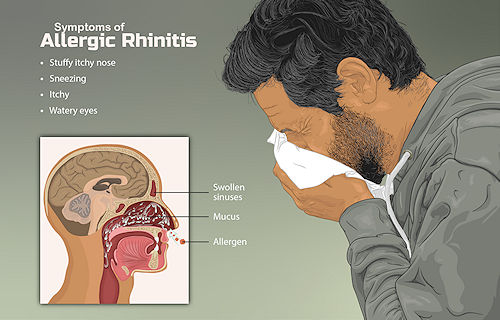 Sneezing due to allergy. [Image: https://www.myupchar.com/en, CC BY-SA 4.0 via Wikimedia Commons] |
 |
 |
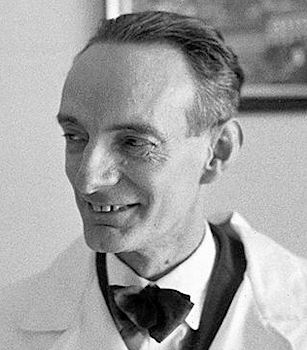
| Daniel Bovet [Image: Carlo Bavagnoli, Public domain, via Wikimedia Commons] |
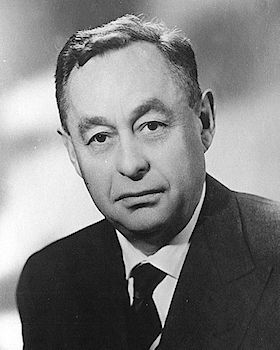
Bernard Halpern [Image: Serbian Academy of Arts and Science] |
Dr Bernard Halpern (photo above, right), who was born in 1904 in present day Ukraine, discovered phenbenzamine in 1942. After completing school in Poland, he moved to Nancy, France and then to Paris, where he worked in the Faculty of Medicine at the University of Paris as a lab assistant so that he could attend lectures, as otherwise he would not have had the money to attend university. After graduating he got a job at the research laboratories of the Rhône-Poulenc company, which collaborated with the therapeutic chemistry laboratory directed by Ernest Fourneau at the Pasteur Institute, which was newly famous for the discovery in 1935 by Daniel Bovet (photo above, left) and colleagues of the antibacterial properties of sulfonilamide (see MOTM for July 2011). Being an expert in immunology and allergy, Halpern became interested in Bovet's work on antihistamine drugs.
 What happened?
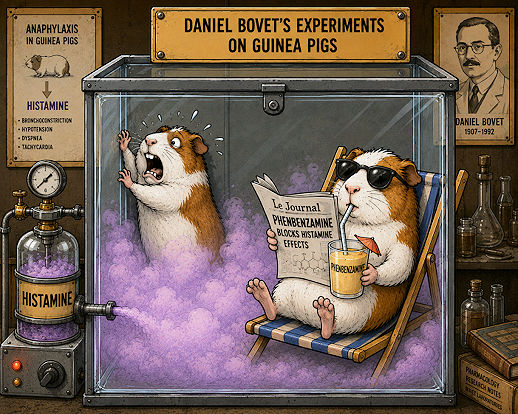
Daniel Bovet was a Swiss–Italian pharmacologist who identified the first molecule (piperoxan) with antihistemic properties, however, it was too toxic to be used by humans. To test it, they used guinea pigs that were kept in a box and given what was presumed to be deadly doses of histamine as well as the molecule to be tested. They then measured the time taken for the guinea pigs to start convulsing and found that convulsions were significantly delayed or even non-existent in some guinea pigs that had been given piperoxan.
Probably not...
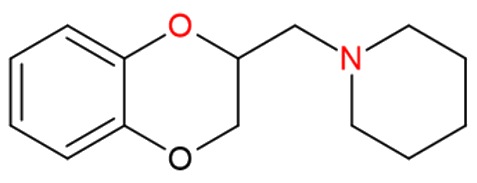 |
| Piperoxan |
Anyway, Bovet and one of his students, Anne-Marie Staub, also went on to develop the concepts of chemical antagonists and structure-activity relationships, which became the foundation of much of modern medicinal chemistry.
World War 2 then started, and Halpern moved to the laboratories of Rhône-Poulenc in Lyons, and using Bovet's previous work developed 2 new antihistamines, called phenbenzamine and promethazine, sold as Antergan and Phenergan, respectively. These drugs were deemed safe enough for human trials, and they proved to be quite effective at controlling allergic reactions.
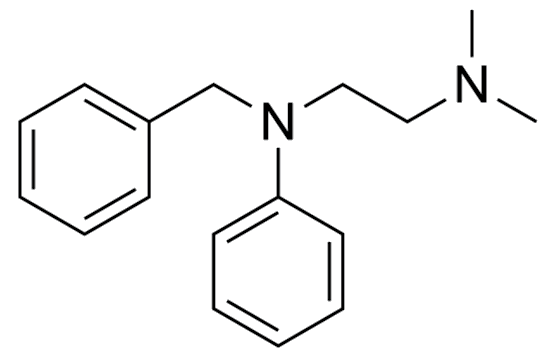 |
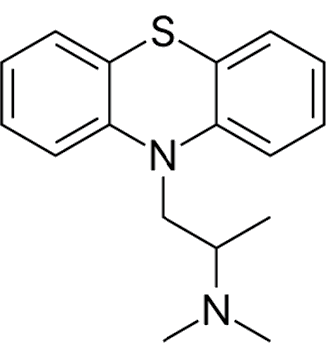 |
| Phenbenzamine (Antergan) | Promethazine (Phenergan) |
Shortly thereafter, it was discovered that phenbenzamine could also preserve blood, making it very important for the medical treatment of soldiers during the war. This drew the attention of Hitler, who asked Halpern to work for his regime, which he rejected. Halpern instead fled to Switzerland with his family in 1942 to escape persecution and subsequently joined the French resistance movement in 1944.
Sadly no. Bovet won the 1957 Nobel Prize for medicine for his contributions to medicine, but Fourneau, Halpern and Staub were overlooked. Nevertheless, Bovet and Halpern maintained a respectful relationship of scientific cooperation with Bovet even mentioning Halpern’s work in his 1957 Nobel laureate lecture.
So how does phenbenzamine actually stop allergic reactions?First, we need to understand how an allergic reaction happens. When the immune system identifies a threat, it releases antibodies which bind to specific immune cells called mast cells, which store histamine. Then, the allergen protein attaches to those antibodies causing the mast cell to break down, releasing stored histamine. This histamine then binds onto four different receptors: H1, H2, H3 and H4, but we are most interested in H1 as this is responsible for classic allergy symptoms, like itchy eyes or sneezing. Phenbenzamine acts as blocker of the H1 receptor preventing histamine from binding to it, thus relieving symptoms such as itchiness or shortness of breath. The H1 receptor has some baseline activity, however, even this is countered by antihistamines, as they force the H1 receptor into its inactive state. |
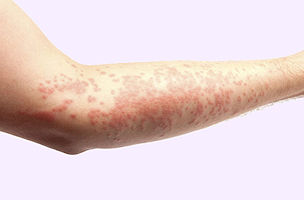 Allergic skin reaction caused by the bite of sandflies. [Image: Hamrayev Zafarjon, CC BY-SA 4.0 via Wikimedia Commons] |
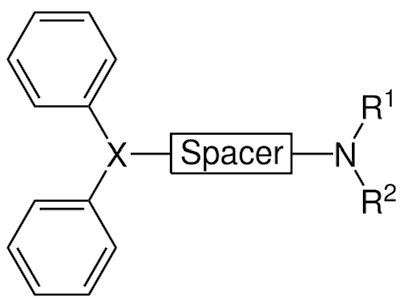
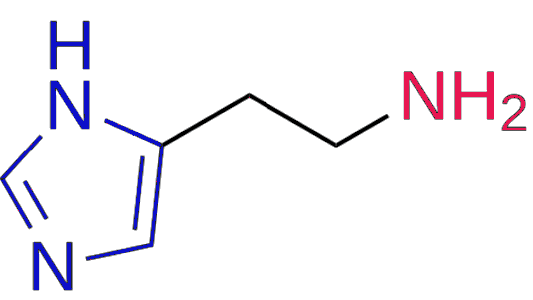
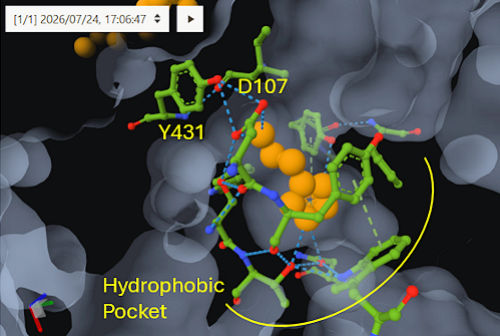
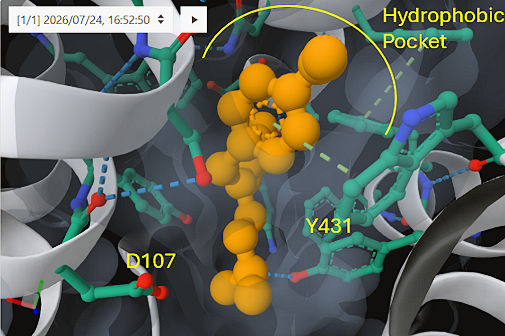
Yes, there is. Histamine and antihistamines share a specific structural motif; an amine group (often a tertiary amine in antihistamines) with a nitrogen/oxygen nearby (typically two carbons away) as well as aromatic cycles further down the molecule. These two structures are key to allowing antihistamines to bind to the H1 receptor’s binding pocket. The amino acids aspartic acid and tyrosine on the edge of the pocket have polar residues of a carboxylic acid and a phenol which are capable of making two hydrogen bonds with groups in the histamine, one with the amine and the other with the nearby N/O. Below these polar amino acids, there are other amino acids with apolar residues such as isoleucine, phenylalanine and alanine which are attracted by van der Waals forces to the bulky ring structures of the antihistamines, creating a hydrophobic pocket which keeps the drug molecule orientated in the correct way and stabilises the ligand-receptor complex.
 |
 |
| The general structure of an H-antihistamines. Two aromatic groups are bonded to a short (2 or 3 carbon) spacer, one of which mimics histamine's imidazole group while the other helps the molecule bind to the receptor. At the end of the spacer is an end amine group that mimics histamine's end-amine group. [Image: Wolfmankurd, CC BY-SA 3.0 via Wikimedia Commons] |
Histamine. The end-amine group is shown in red, whilst the imidazole ring is shown in blue. |
Exactly.
Yes, you got it.
 |
 |
| Histamine in the H1 receptor binding pocket. The two amino acids which hydrogen-bond to the molecule are labelled D107 (aspartic acid) and Y431 (tyrosine). |
Mepyramine (a variant of phenbenzamine) fitting into eactly the same pocket in H1 as histamine. |
Yes, there are but during the 1950s the side-effects of phenbenzamine and other anthistamines were not well understood. They were hailed as miracle drugs and used in sleeping pills, anti-itching medications, counters to motion sickness and even as tranquilizers. Overuse of antihistamines led to drowsiness, dry mouth, blurred vision, constipation, and urinary retention due to the fact that first-generation antihistamines penetrate the blood-brain barrier, have low receptor selectivity and interfere with acetylcholine, a vital neurotransmitter. Chronic use of these early antihistamines has even been associated with 40% higher risk of mild cognitive impairment. Phenbenzamine is also less effective when used after allergy symptoms have started, as histamine has already bound to the H1 receptor, meaning it is most effective when taken before the immune system is exposed to an allergen. It also doesn’t address the wider overreaction of the immune system; it only relieves symptoms for a certain period of time.
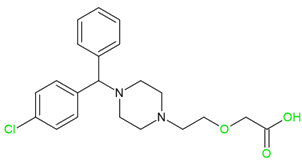
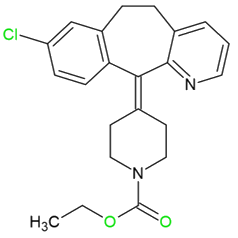
First-generation antihistamines, like phenbenzamine, caused many side-effects due to the fact that they could cross the blood-brain barrier. This barrier only allows small lipophilic molecules such as phenbenzamine to cross into the brain. Once inside, the antihistamine can bind to H1 receptors but also acetylcholine receptors, among others, causing drowsiness and cognitive impairment. To combat this, drug developers added polar groups such as carboxylic acids and halogens to make second-generation antihistamines more hydrophilic, decreasing their ability to penetrate the blood-brain barrier and lowering their sedative effects.
 |
 |
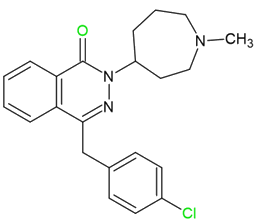 |
| Ceterizine | Loratidine | Azelastine |
Yes, the effects of first-generation antihistamines, on average, only lasted for 4-6 hours, whereas, second-generation antihistamines, such as those shown in the figure below, offer symptom relief for up to 24 hours. This increased duration is due to the larger size of molecule and greater use of bulky ring structures. As depicted in the image of the binding pocket above, apolar residues at the bottom of the binding pocket interact with the antihistamine’s rings via attractive van der Waals forces, increasing the affinity of the molecule to the protein. This means that second-generation antihistamines stay in the binding pocket deactivating the H1 receptor for longer. As well as this, with lower side-effects from second-generation antihistamines, chemists are free to research antihistamines with longer half-lives inside the body, as side-effects would not be as prolonged as they would be in first-generation antihistamines. You can imagine, if phenbenzamine makes you feel drowsy, it would be a lot more inconvenient if that lasted for 24 hours rather than 6 hours!
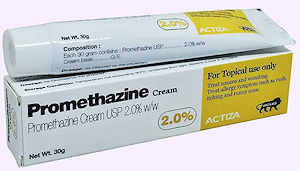
Nowadays, antihistamine creams, such as this one containing promethazine, are readily available in all pharmacies.
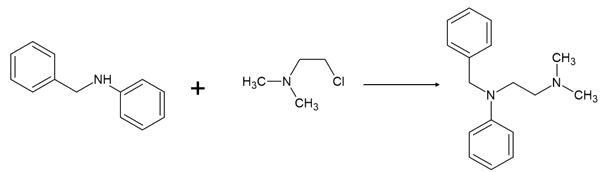
Phenbenzamine is made in a SN2 nucleophilic substitution reaction between N-benzylaniline and 2-chloroethyldimethylamine. Reflux is also needed to increase the rate of reaction, and toluene is used as a solvent. The product is then vacuum distilled.
Not quite. Currently the gold standard for treatment of allergy symptoms is fexofenadine, a third-generation antihistamine that provides even stronger and longer-lasting symptom relief and has the added benefit of fewer interactions with other drug molecules.
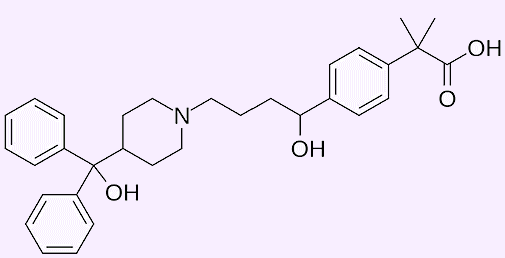 |
| Fexofenadine |
Oral immunotherapy (OIT) is also now becoming more available with peanut OIT first being made available on the NHS in June 2022. OIT is where patients are exposed to the allergen over a period of time and helps to address the overreaction of the immune system that causes symptoms that antihistamines seek to counter. The story of antihistamines that began with Halpern’s phenbenzamine was the first step in a long journey towards treating allergies, and highlights the different phases of development of any novel drug, making it an essential lesson in the fields of medicine and chemistry.
Wikipedia: Histamine; Antihistamine; H1 receptor; Phenbenzamine; Bernard Halpern; Daniel Bovet; Anne-Marie Staub; Ernest Fourneau; Piperoxan; fexofenadine; Phenergan
 Back to Molecule of the Month page. [DOI:10.6084/m9.figshare.33328038]